
Archival work can sound intimidating: arrangement, description, appraisal, digitization. Here’s the plain-language version. I help you figure out what you have, decide what matters, organize it so people can find it, and protect it for the long run. Some clients need one piece of that. Some need all of it. We figure out which, together, before any work begins.
For small & volunteer-run organizations, specifically…
If you’re a historical society, a community archives, a church or parish, or any small heritage nonprofit, this section is for you.
No formal archive yet? That’s normal, not a problem. Many of the organizations I work with are starting from a closet full of boxes. We build a plan from there.
Board and paperwork support. Beyond the records themselves, I can help with incorporation, board structure, and grant applications: the administrative side of keeping a small heritage organization alive.
Pricing that fits. Rates are scaled for community and nonprofit budgets, with flat fees available for defined projects so you know the cost up front.
We work at your pace. Projects can be broken into phases so you can pause between stages as funding or volunteer time allows.
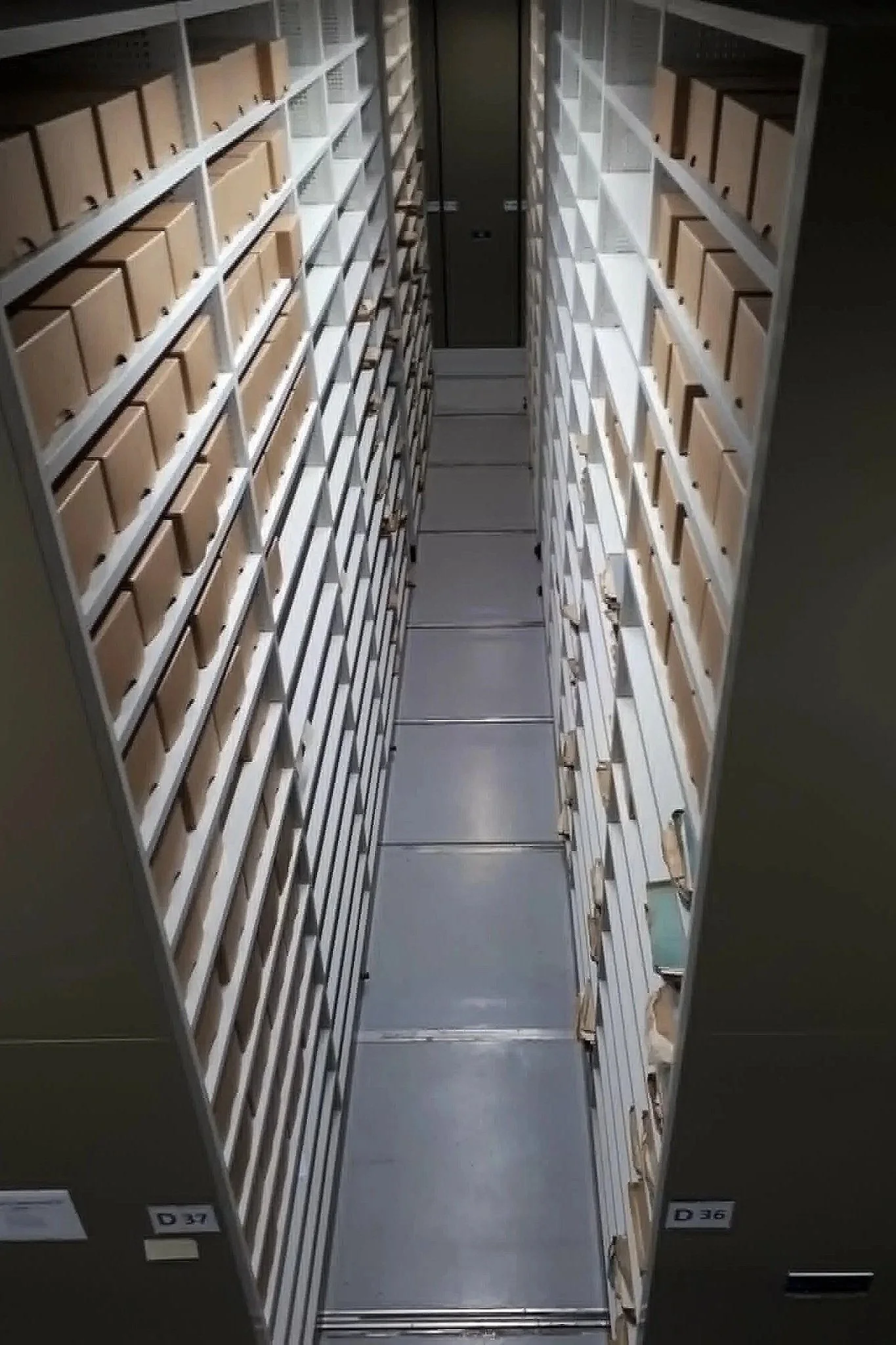
Military Archives, Dublin, Republic of Ireland
-
For organizations that need a clear picture of where their records stand and a realistic path forward, including those with no formal archives program at all.
Collections and records assessments (physical, digital, or both)
Archives start-up planning for organizations building a program from scratch
Strategic and long-range planning for existing archives or heritage programs
Needs assessments tied to grant applications or board decision-making
Workflow review and operational improvements for intake, cataloguing, and reference processes
-
Practical, realistic support for historical societies, community archives, church and parish records, and small nonprofits that make up much of the heritage sector.
Built on lived experience, not just theory.Incorporation support for new historical societies and heritage nonprofits, including Registry of Joint Stocks filings and founding documents
Board and governance structure advice for volunteer-run organizations, including officer roles, minutes, and member records
Grant application writing, review, and advising
Program development scaled to limited budgets and volunteer capacity
Volunteer recruitment, recognition, and retention support
Ongoing advisory support on retainer for organizations without in-house archival expertise
Community communications support: newsletters, notices, and correspondence with regional or provincial authorities
-
Hands-on work bringing physical and intellectual control to collections, from a single accession to a full backlog.
Arrangement and description in compliance with current standards
Finding aid creation, from single-accession inventories to full collection guides
Backlog reduction and processing of unprocessed accumulations
Rehousing using archival-quality materials
Preservation reviews: environmental conditions, shelving, and enclosure assessments
Survey and appraisal of donated or inherited collections
-
Digitizing physical holdings and managing born-digital and administrative records, using standards-based digital preservation practice
Digitization planning, prioritization, and equipment guidance
Digital preservation strategy
Collections management system selection and setup
Digital archiving and born-digital records workflows
Metadata cleanup and database structuring
Custom, lightweight finding-aid or search portals for public or internal use
-
Foundational documents and systems that let an organization run its records program consistently, with or without dedicated staff.
Records management policy and retention schedule development
Access, privacy, and governance policy drafting
Records management program design to reduce storage, move, and supply costs
Confidential and sensitive-records consultations
Institutional and legacy-file planning to capture organizational milestones
-
Combines archival appraisal with historical and genealogical research for clients needing to understand or substantiate what they hold.
Archival and appraisal support for donated collections
Historical research on institutional, family, or property history
Genealogical research and lineage documentation
Reference and research services for complex historical questions
Report and proposal writing based on research findings
-
Building skills within an organization so staff and volunteers can sustain archival work between consulting engagements.
On-site or virtual training for staff and volunteers on the basics
Workshops on digitization, preservation basics, and handling procedures
Introductory sessions on archival ethics and ethical stewardship of sensitive materials
Custom training tailored to a specific institution’s collection or system
Reference guideline development for front-line or volunteer staff
-
Protecting collections during moments of physical risk or transition.
Disaster preparedness and emergency response planning
Salvage guidance following water, fire, mould, or pest damage
Relocation planning, packing guidance, and sequencing for archive moves
Repository layout planning for new or renovated storage spaces
-
Turning archival holdings into public-facing programming, exhibits, and community connection.
Interpretive writing for exhibitions, anniversaries, and heritage plaques
Public program and library programming development drawing on archival holdings
Oral history project planning and community documentation initiatives
Public history and community engagement projects
Digital timelines and public-facing content built from archival materials
Our Services
Flexible ways to work together
Every service above can be delivered under whatever structure fits the project best: hourly for open-ended advising, a day rate for on-site work, a flat project fee for clearly scoped deliverables, a monthly retainer for ongoing support, or a phased approach for larger programs that need to pause between stages. Pricing is scaled to organization size and budget; the first conversation is where we figure out what makes sense.
Not sure which of these you need? That’s what the first conversation is for!